







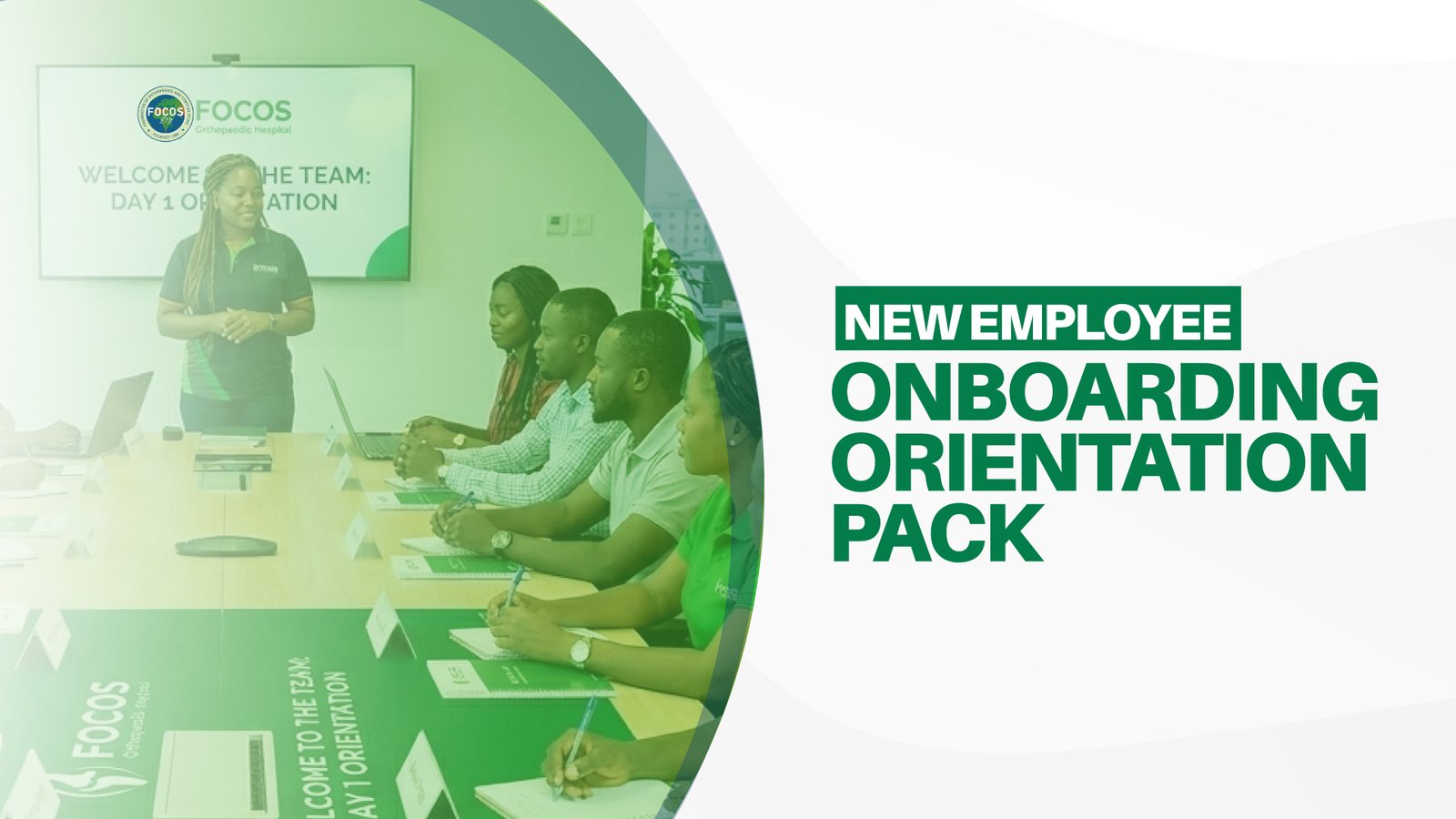
EMPLOYEE ONBOARDING ORIENTATION PACK
Instructor
About This Course
Welcome to FOCOS new entrant orientation.
This course helps you get started at FOCOS. It covers everything you need to know, from hospital rules to keeping patients and yourself safe. The course has seven modules:
- Module 1: Hospital Overview and Handbook
- Module 2: Quality and Patient Safety
- Module 3: Customer Service
- Module 4: Infection Prevention & Control
- Module 5: Health and Safety
- Module 6: Cyber Security and Privacy
- Module 7: Security and Safety
What You Will Learn
- How the hospital works and where to find key information.
- Ways to keep patients safe and give quality care.
- How to serve patients and families with respect and kindness.
- Steps to stop infections from spreading.
- How to stay safe and healthy at work.
- Basic IT tools you will use on the job.
- Security guidelines to protect everyone in the hospital.
How to Complete the Course
Go through all seven modules. Don’t forget to take the pre-tests and post-tests for each one.
Happy learning!
Joy Dede Okrah
Curriculum Overview
This course includes 7 modules, 21 lessons, and 0 hours of materials.
This evaluates learners’ existing knowledge and understanding of the course content before starting the module.
Welcome to FOCOS Hospital.
This HR orientation module is in two parts (Overview / History of the organization and Employee handbook) presented by the HR Department. Led by: JULIET OBENG-KWAKYE (MRS.)
Objectives:
1. Instil company culture: To serve as the first step in educating and instilling into new employees/ entrants, the company’s mission, vision, and culture.
2. Integration: To familiarize new hires with tools, systems, and team members, allowing them to reach full productivity much sooner.
3. Clear Expectations: To clarify role-specific tasks, performance metrics, company goals, and strategies.
4. Compliance: Clearly introduce new employees to the company’s handbook, code of conduct, and clarify roles and policies.
5. Increase confidence of new entrants, reduce anxiety, and turnover.
6. Promotes Consistency: A standardized orientation module ensures that all new employees, interns, national service personnel and Academic residents, regardless of role, receive the same essential information, creating a fair and equitable experience.
7. Workplace Tour and Introductions: Team meetings and facility familiarization help new entrants to navigate through their new environment.
This evaluates learners’ understanding of the course content after completing the module and measures learning progress.
This evaluates learners’ existing knowledge and understanding of the course content before starting the module.
Hello and a very warm welcome to all our new colleagues!
We are absolutely thrilled to have you join the FOCOS family. My name is Joy Dede Okrah, and I am with the Quality unit of FOCOS Orthopaedic Hospital.
Today, we're going to embark on a very important journey together: an overview of Healthcare Quality and Patient Safety. This isn't just about rules and regulations; it's about the core of why we are all here: to provide exceptional, safe care for every patient, every time.
Let's begin.
This evaluates learners’ understanding of the course content after completing the module and measures learning progress.
This evaluates learners’ existing knowledge and understanding of the course content before starting the module.
Welcome to FOCOS Hospital and to the Customer Service Training, My name is Sylvia Afari-Dwamena and I will be your facilitator.
At the end of this training, I hope you will be able to achieve the objectives below:
- To develop problem-solving abilities.
- To ensure consistency in service delivery.
- To build confidence in dealing with customers.
- To develop and enhance communication skills.
Let's begin.
This evaluates learners’ understanding of the course content after completing the module and measures learning progress.
This evaluates learners’ existing knowledge and understanding of the course content before starting the module.
Welcome to the Infection Prevention Orientation. As new recruits, you are joining the front line of defence for patient safety and public health. This session is designed to equip you with the fundamental knowledge and practical skills needed to prevent the spread of infectious agents within our facility. Whether you are in a clinical, administrative, or support role, understanding how infections spread and how to stop them, is critical to your success and the well-being of everyone in this environment. My name is Claudia Wireko-Tei, your instructor for this session.
Importance of the Training
Infection prevention is not just a set of rules; it is a core professional responsibility. Here is why this training is vital:
1. Patient Safety: Healthcare-associated infections (HAIs) affect hundreds of millions of patients worldwide annually. Most of these are preventable through proper practices.
2. Workplace Protection: You, your colleagues, and your family at home deserve a safe work environment. Proper infection control reduces your risk of occupational exposure to bloodborne pathogens, respiratory viruses, and other hazards.
3. Antimicrobial Resistance: Poor infection control contributes to the rise of "superbugs" (multidrug-resistant organisms). Breaking the chain of infection helps preserve the effectiveness of life-saving antibiotics.
4. Regulatory & Legal Compliance: Adherence to standards (e.g., OSHA, CDC, WHO, Joint Commission) is mandatory. Non-compliance can lead to citations, fines, litigation or loss of licensure.
Training Objectives
By the end of this orientation, new recruits will be able to:
1. Identify the six links in the "Chain of Infection" and recognize common modes of transmission (contact, droplet, airborne).
2. Demonstrate correct sequences for hand hygiene (using soap/water and alcohol-based hand rub) and proper selection/use of Personal Protective Equipment (PPE).
3. Apply Standard Precautions to every patient interaction, including safe handling of sharps, waste disposal, and respiratory etiquette.
This evaluates learners’ understanding of the course content after completing the module and measures learning progress.
This evaluates learners’ existing knowledge and understanding of the course content before starting the module.
Welcome to the Health and Safety Orientation Session at FOCOS.
This session introduces you to essential workplace health and safety guidelines, including hazard identification, accident prevention, emergency procedures, and safe work practices. It will help you understand your health and safety responsibilities and how to contribute to a safe and healthy environment for yourself, patients, visitors, and colleagues.
This evaluates learners’ understanding of the course content after completing the module and measures learning progress.
This evaluates learners’ existing knowledge and understanding of the course content before starting the module.
This module is designed to empower every member of our organization with the knowledge and tools necessary to protect the integrity, confidentiality, and availability of our digital assets, because ultimately, cybersecurity is everyone’s responsibility.
Led by Franklin K. Coleman (IT Officer), this session serves as a foundational step in our commitment to operational resilience, efficiency and data stewardship.
The Importance of Cybersecurity & Data Protection
To begin, consider this: What is the first word that comes to mind when you hear "cybersecurity"? Whether it's "trust," "defense," or "accountability," your perspective is vital. We must deeply understand why data protection matters – not just as an IT policy, but as a core component of our ethical and professional conduct.
Learning Objectives
By the end of this session, participants will be equipped to:
- Define and Classify Incidents: Clearly define cybersecurity events and differentiate between various types (phishing, social engineering, malware, etc.).
- Identification Skills: Gain the ability to identify both potential threats (suspicious links, unauthorized access attempts) and actual security events as they occur.
- Build a “If you see something, say something” culture: Recognize the critical importance of a blame-free reporting culture, where prompt disclosure of mistakes or suspected breaches is encouraged to enable rapid response and organizational learning rather than punishment.
- Attendance awareness: Be aware of the nuances associated with ensuring smooth attendance registry and scheduling.
This evaluates learners’ understanding of the course content after completing the module and measures learning progress.
This evaluates learners’ existing knowledge and understanding of the course content before starting the module.
Welcome to the Security Orientation Session at FOCOS. This session, led by Mallet Mensah, introduces you to hospital security procedures, access control, incident reporting, and your role in protecting patients, staff, visitors, and hospital property.
This evaluates learners’ understanding of the course content after completing the module and measures learning progress.
Quiz Certificate
Quiz Certificate
Quiz Certificate
Quiz Certificate
Quiz Certificate
Quiz Certificate
Quiz Certificate
Course Certificate
Course Specifications
Subscribe to Our Newsletter


Additional Links
Login Register Contact Certificate Validation Become Instructor About Terms and PoliciesContact US


Reply to Comment